
The Best Customer Experiences Don't Happen by Accident

Updated: Aug 12
In a world full of automation, Human Connection Is the Competitive Edge:
It's Customer Service Week, and it deserves more than a banner in the break room or a mention.
In a world overflowing with apps, bots, and automated "support," genuine human connection has become more and more and somehow, more valuable than ever. We send more messages than any generation in history. We have smartphones in our hands around the clock. And yet we've never felt more frustrated trying to get a straight answer from a company we pay every month.
There's something deeply ironic about that. So let's talk about it.
A Brief History of the Contact Center

It started with a phone call.
On March 10, 1876, Alexander Graham Bell made the world's first telephone call laying the foundation for an entire industry.
The first true call center is widely credited to Birmingham Press and Mail in the UK in 1965, using early switchboard technology to route high volumes of calls to agents. By the early 1970s, Automatic Call Distributor (ACD) systems made it possible to filter and assign calls to the most suitable agent — a concept that still underpins contact centers today.
A few milestones worth knowing:
1967 — AT&T launched the 800 toll-free number, enabling the modern call center model at scale
1983 — The Oxford English Dictionary officially added "call center" as a standard business term
1990s — Email and web chat arrived. "Call centers" became "contact centers"
2000s — The internet brought automation and smarter CRMs
2010s — The cloud removed physical walls. Customers could reach out from anywhere — and expected you to be ready
2020s — AI stepped in as a working team member. Virtual agents handle the routine. Human agents handle the rest

What Drives Real Quality:
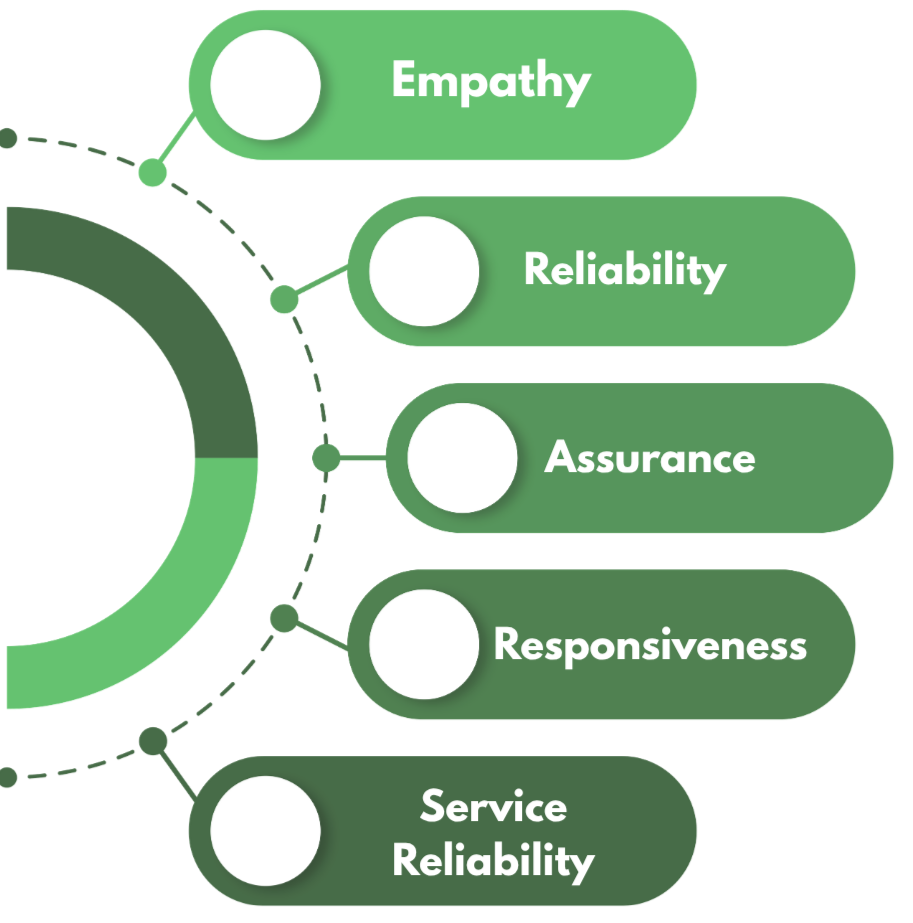
Does anyone really care that much about customer service anymore? The research says yes — emphatically. Customer service quality isn't soft. It directly drives brand perception, retention, and revenue. Researchers Parasuraman, Zeithaml, and Berry identified five dimensions customers use to evaluate service, and they still hold up today.
Tangibility is the first impression before a word is spoken. Professional agents, clean interfaces, consistent branding. These signal that you take the customer's experience seriously.
Reliability is doing what you said you'd do. Customers don't expect perfection. They expect consistency. A brand that delivers on small promises builds the credibility that keeps people coming back.
Responsiveness is speed and attentiveness. Customers who feel ignored don't just leave — they tell people. Fast, clear responses signal that you value their time.
Assurance is trust built through expertise. Agents who know the product and follow through transform a routine interaction into a reason to stay loyal.
Empathy is the differentiator. Genuine human care stands out in an era of automation. Treating customers like people, not ticket numbers, is what turns a resolved complaint into a five-star review.
Together, these five dimensions don't just describe good service. They define your brand.
AI: When to Use It, and When to Put It Down...
We know AI in contact centers isn't going anywhere, and we shouldn't see that as a bad thing.
When it's used well, it's transformative.
Used poorly, it's the reason people scream "REPRESENTATIVE!" into their phones...
Where AI works:
High-volume, repetitive inquiries, order status, password resets, FAQs
24/7 availability for simple self-service
Smarter call routing to the right agent faster
Transcribing and summarizing calls to cut agent wrap-up time
Where AI doesn't work (quite yet):
Emotionally charged situations — billing disputes, medical issues and indisputably, bereavement
Cases that requiring real judgment and empathy
Any customer who already failed at self-service and is becoming frustrated
The mistake most companies make isn't adopting AI, but deploying where they should have deployed a person, justifying short term savings. The cost shows up later, in churn.
The Wait Time Problem — It's Not Just a People Problem
Long hold times rarely have a single cause. Under staffing plays a role. So do complex calls that take longer than expected. But more often than not, the biggest culprit is the system itself.
Outdated infrastructure forces agents into constant workarounds, toggling between multiple screens, re-entering the same data, manually piecing together a customer's history mid-call. That friction adds up directly to handle time. And your customers feel every second of it.
Modern CCaaS platforms were built to eliminate that friction. Unified agent desktops, real-time customer data, intelligent routing, omnichannel integration — when it all works together, agents spend less time hunting and more time actually helping.
For the more complex calls, AI-powered Agent Assist takes it a step further. Surfacing relevant information, suggests responses, and guides agents in real time without the customer ever knowing it's really there, allowing the agent to look sharper, while calls moves faster.
Everyone wins.
The technology exists to make this better. The question is whether your organization has the right system, configured correctly, for your actual needs.
Not All Vendors Are the Same
The CCaaS market is saturated— Genesys, Five9, NICE CXone, Avaya, Talkdesk, Amazon Connect, RingCentral, and myriads more. Each with real strengths and real limitations. Some are built for enterprise scale, while others fit mid-market better. Some lead on AI whle others lead primarily on workforce management.

Buyer beware: Why evaluation is essential for business success.
Most companies evaluate these platforms without specialized or independent guidance. Mistake tend to occur when clients primarily take vendor demos at face value, sign multi-year contracts, and end up stuck with a system that's oversized,undersized, or simply working against the grain of how their teams needs to successfully operate. That's why overspending in contact center tech looks like not one big mistake, but rather a slow bleed of licensing costs for unused features, surprise integration costs, and a platform agents quietly work around every day.
Why Agnostic Matters:
An agnostic advisory firm has no financial stake in which vendor you choose, as the success is driven by the success of the business.

Flowstone Group starts with you business—Your volume, your channels, your workflows, your growth plans. We thrive in evaluating and education our clients on what's actually available and feasible in the market. No agenda, no preferred partner, but the right fit for your success.
Independence matters because:
Vendors position their strengths. We position your needs.
Contract terms are negotiable, but only if you know your leverage.
A platform that's deployed but poorly configured delivers none of the promised ROI.
The market moves fast. Best-in-class 18 months ago may already have a stronger competitor.
"You shouldn't have to become a CCaaS expert to make a smart decisions for your business. That's what we're here for."
The Bottom Line:
Behind every support ticket, hold queue, and chatbot interaction is a real person who needs help, and a business has the chance to show up for them.
Technology has never been better, hence the expectations have never been higher. If your contact center feels held together with duct tape, it probably is. You don't have to figure out the replacement alone.
Interested in an independent review of your contact center environment? Let's talk.


Comments